PRC Dress Code & What to Bring: Exam, Oath & Office 2026
Disclaimer: This website is not affiliated with the Professional Regulation Commission (PRC) or the Philippine government. All information is sourced from official PRC channels and published for guidance only.
Last Updated: August 2026
Whether it’s exam eve and the group chat can’t agree on what shirt is “allowed,” your oath ceremony invitation says “formal” without elaborating, or you’re just heading to a PRC office and wondering if slippers get turned away at the guard — attire questions at PRC have real answers with real consequences. This guide covers the PRC dress code across every setting: exam day, office visits, oath taking, and the ID-photo rules, plus the complete what-to-bring lists that pair with each.
Why PRC Attire Rules Exist (and Where They’re Written)
Three sources govern what you wear, in order of authority:
- Your exam’s program/advisory — every board exam publishes an examinee program before exam day stating the attire rule for that specific exam. This document outranks every blog, group chat, and older exam’s tradition.
- Office decorum standards — PRC offices, like government frontline offices generally, expect decent attire; guards enforce the floor of it.
- Ceremony advisories — mass oath events publish their own attire codes per event.
Why this matters: attire rules are per-program, not universal — the exact reason this guide teaches the pattern and points you to your advisory, instead of pretending one shirt rule covers forty boards.
PRC Dress Code on Board Exam Day
The pattern across boards, and what to verify:
- The plain white shirt tradition — many boards’ exam programs prescribe a plain white shirt or t-shirt without prints, logos, or markings for exam day. It’s the single most common rule, and the reason exam-morning crowds look like a uniform.
- Bottoms and footwear — decent pants/jeans and closed or sensible footwear; the programs focus on the shirt, decency covers the rest.
- No prints means no prints — small logos, faded graphics, and “it’s barely visible” arguments lose at the gate. Plain means plain.
- Verify YOUR exam’s program — the advisory released with your exam (the same document family as the room assignment) states the rule for your board and date. Read it the week it posts.
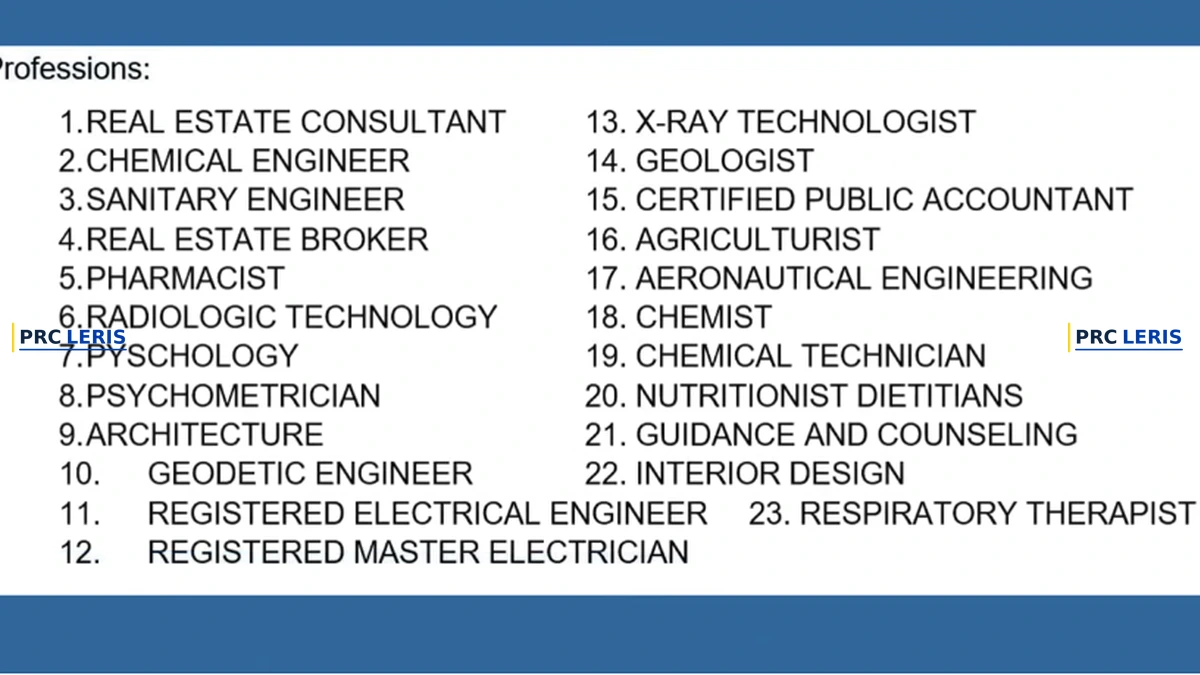
Group A — Professions Requiring White Polo/Blouse
The following 23 professions typically require examinees to wear a white polo shirt with collar (male) or white blouse with collar (female) — without any seal, logo, or mark — paired with decent pants or slacks:
For male examinees:

For female examinees:

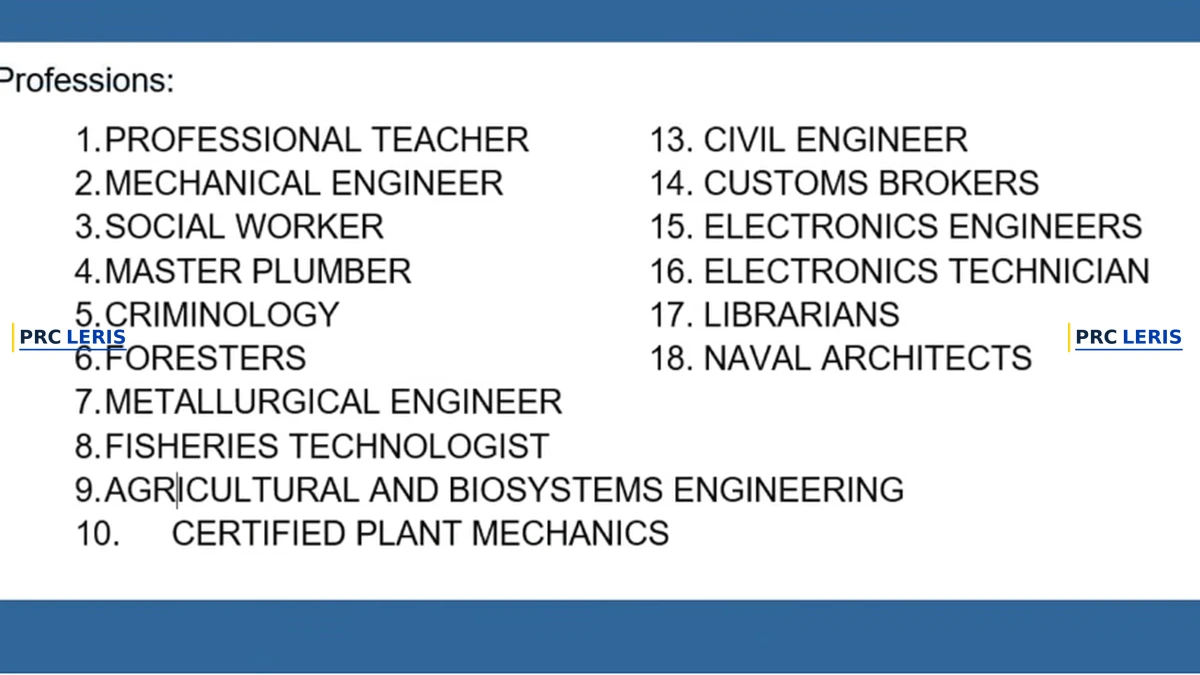
Group B — Professions Requiring Tucked-In White Polo/Blouse
The following 18 professions typically require examinees to wear a tucked-in white polo shirt with collar (male) or tucked-in white blouse with collar (female) — without any seal, logo, or mark — paired with decent pants or slacks:
For male examinees:

For female examinees:

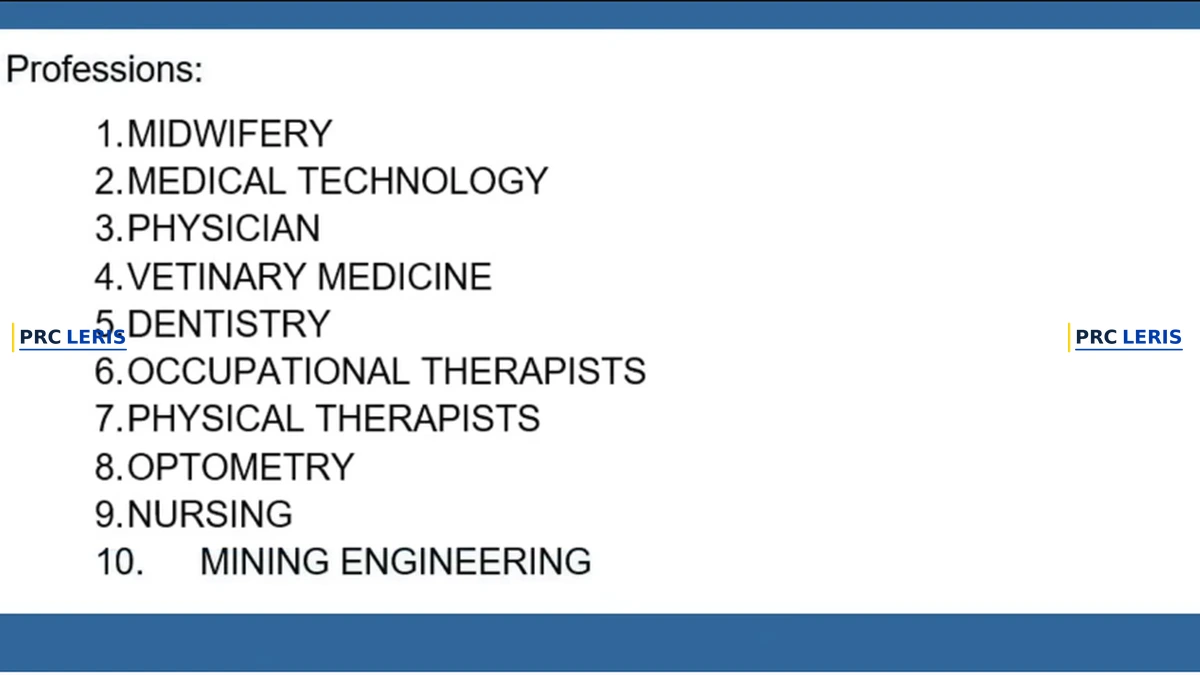
Group C — Professions Requiring College Uniform
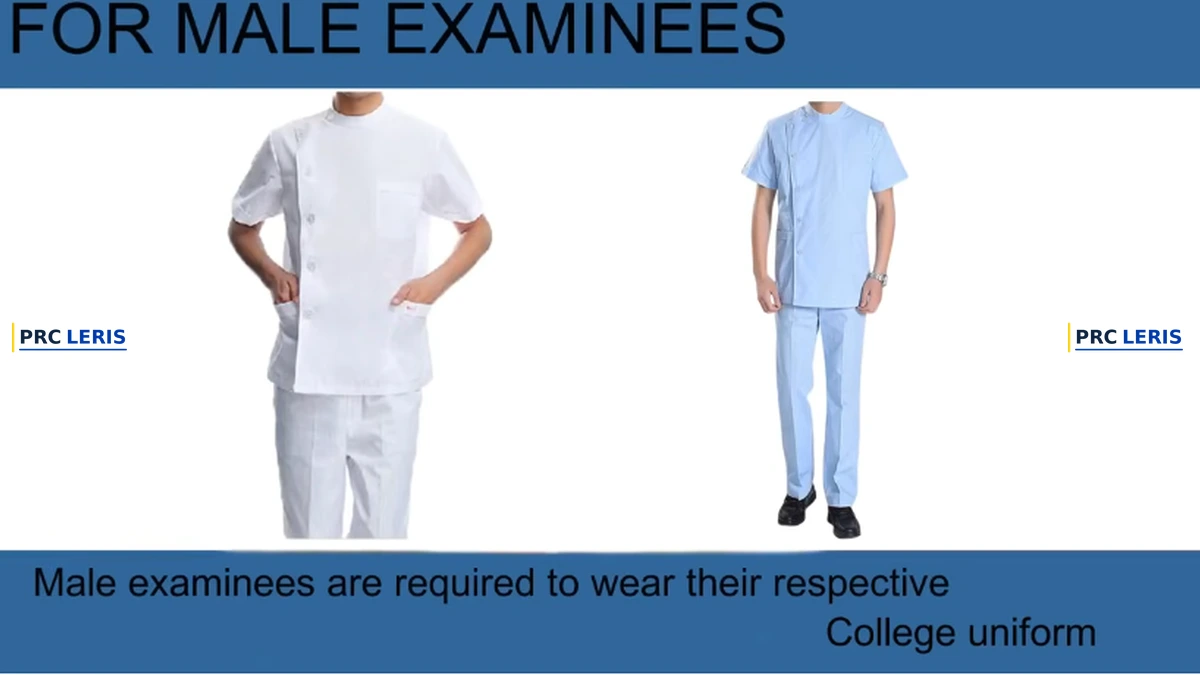
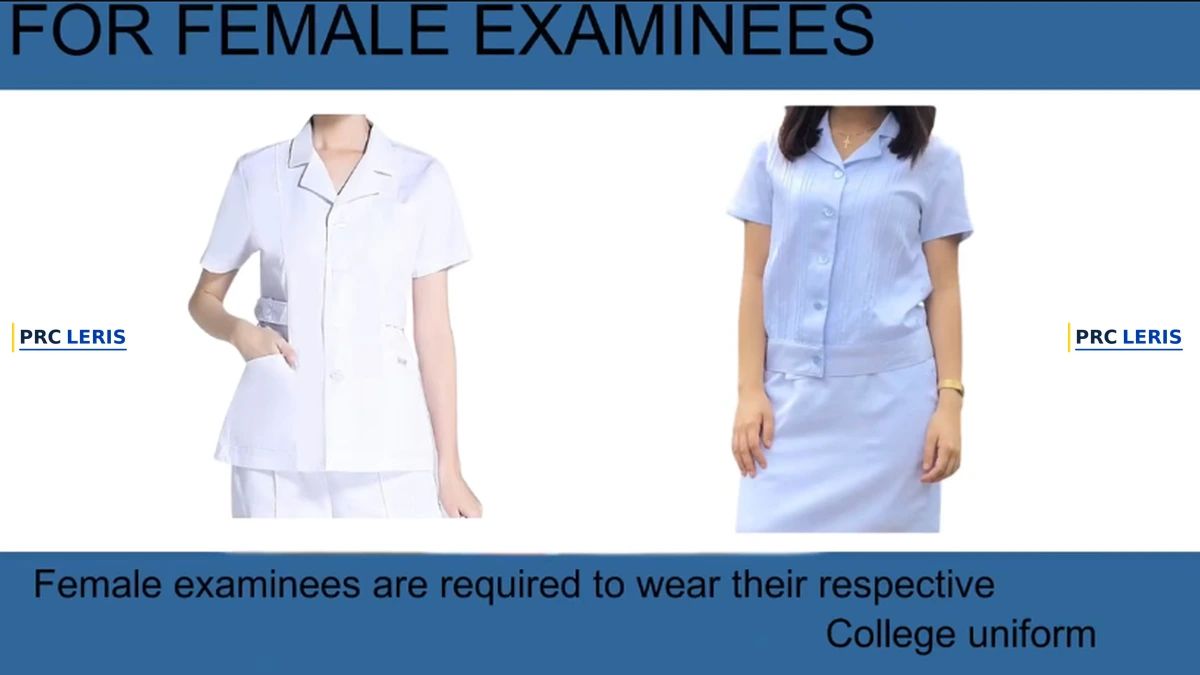
The following 10 professions typically require examinees to wear their respective college uniform on exam day:
For male examinees:
For female examinees:
Tip: Pack a spare plain white shirt in your bag — spills, commute accidents, and doorway surprises happen every exam day. The folded spare costs nothing and solves everything.
PRC Dress Code for Office Visits
For renewals, claiming, filing, and every counter transaction:
- Decent, respectful attire is the standard — collared shirts or plain tops, pants or knee-length-plus bottoms.
- The commonly refused list: sleeveless/sando, very short shorts, revealing tops, and slippers/flip-flops — the classic guard-gate turnaround.
- Closed shoes or decent sandals clear the footwear question everywhere.
- Photo-capture transactions raise the bar — renewals and registrations that capture your image mean your counter outfit becomes your card. Wear the collared top the photo rules require and the visit does double duty.
PRC Dress Code for Oath Taking
Two settings, two standards:
- PRC-office oath (with registration): business/decent attire consistent with office standards — the collared, presentable outfit you’d wear to the counter anyway. (Our oath taking guide covers the office-oath route.)
- Mass oath ceremonies: the event advisory prescribes it — commonly formal or business attire, with specific ceremonies specifying white or business dress, and toga arrangements where the event includes them. The advisory’s word is final; read it before shopping.
- The photographs argument — whatever the minimum says, oath photos follow you professionally forever. Dress at the ceiling of the code, not the floor.
Photo Attire Rules (LERIS Upload & Name-Tag Photos)
The attire rule you wear on paper — governing your LERIS profile photo, name-tag prints, and the card image:
- Decent attire with a collar — the non-negotiable across every PRC photo spec.
- Plain white background, front-facing, neutral expression.
- No filters, no eyeglasses glare, no caps or accessories covering the face — both ears visible where possible.
- Recent — within six months.
- Studios know the order as “PRC picture with name tag” — say exactly that, order four copies. (Full photo mechanics: renewal requirements and create a LERIS account guides.)
What to Bring: Per-Occasion Checklists
Exam Day:
- Notice of Admission (NOA)
- Valid ID
- Room assignment details on paper (room assignment guide)
- Approved calculator per your board (calculator guide)
- Pencils, black pens, eraser, sharpener
- Plain white shirt worn + spare packed
- Water and simple snacks per program allowances
- NO phones-out policies apply inside — follow proctor instructions on devices
Office Visit (renewal/claiming/filing):
- Printed application form and appointment slip
- Payment confirmation or exact cash
- Valid ID
- Name-tag photos where the transaction requires
- Transaction-specific documents per its guide on this site
- Collared attire — especially for photo-capture transactions
Oath Taking:
- Accomplished Oath Form (notarized where required)
- Valid ID and registration documents
- Ceremony registration proof (mass events)
- Attire per the advisory + a pen
PRC Dress Code by Occasion Comparison Table
| Occasion | Attire Standard | Strictness | Governing Source |
|---|---|---|---|
| Board exam day | Plain white shirt, no prints (per program) | Highest — gate-enforced | Your exam’s program/advisory |
| Office visit | Decent; no sando, short shorts, slippers | Moderate — guard-enforced | Office decorum standards |
| Photo-capture transaction | Collared, decent | High — it becomes your card | PRC photo specs |
| PRC-office oath | Business/decent | Moderate | Office standards |
| Mass oath ceremony | Formal/business per advisory | High — event-enforced | Ceremony advisory |
So, the plain white collarless shirt for exams and the plain collared shirt for everything else is the two-shirt system that clears every PRC gate in the country — and reading your specific program or advisory the week it posts is the one habit that makes this table advisory-proof.
Common Attire Problems and Fixes
Turned Away at the Exam Gate for a Printed Shirt
The spare-shirt argument, learned expensively. Nearby sari-sari stores and ukay racks near testing schools do brisk exam-morning business — but the packed spare costs less and risks nothing.
Slippers at the Office Door
Guards enforce the footwear floor. Nearby stalls sell cheap sandals every day for this exact reason — or reschedule the errand rather than argue the doorway.
Photo Rejected for a Collarless Top
The collar rule spares nobody. Studios near PRC offices shoot compliant photos in minutes — the thirty-minute fix that saves the appointment.
“Formal” on the Oath Invite, Undefined
The advisory’s wording plus the ceremony organizer’s page settles it — and when genuinely silent, business attire is the answer that’s never wrong at any oath in the country.
Cold Testing Room, Jacket Confusion
Plain, unprinted layers generally pass with inspection; printed hoodies argue at the door. Pack the plain one and comply with any remove-for-inspection request.
Tips for Getting It Right the First Time
Read Your Program the Day It Posts
The attire rule for your exam lives in your exam’s advisory on prc.gov.ph — five minutes of reading beats every group-chat debate.
Run the Two-Shirt System
One plain white for exam days, one plain collared for offices, photos, and oaths — the entire PRC wardrobe for under ₱500.
Pack the Spare, Always
Exam-day spills, commute rain, doorway rejections — the folded spare in the bag answers all of them.
Dress for the Photo Even When You’re “Just Claiming”
Transactions surprise you with capture steps — the collared default costs nothing and covers everything.
Lay It All Out the Night Before
Outfit, documents, calculator, pens — one chair, one checklist, zero morning improvisation.
Overdress the Oath
The ceremony photos outlive the ceremony. Ceiling, not floor.
Keep Prints Off Everything on Exam Day
Shirt, jacket, cap — the no-markings logic extends to layers; plain everything ends the inspection conversation.
Bookmark This Page for Every PRC Errand
The occasions repeat for your whole career — the checklists above are the pre-trip ritual.
PRC Contact Information
| Concern | Contact |
|---|---|
| Exam programs & advisories | [email protected] |
| General inquiries | [email protected] |
| Feedback form (CRMS) | crms.prc.gov.ph/feedbackform |
Official advisories: prc.gov.ph
Frequently Asked Questions (FAQs)
What is the PRC dress code for board exams? Most exam programs prescribe a plain white shirt without prints or logos, with decent bottoms and footwear — your exam’s own advisory states the final rule.
Can I wear a printed shirt to the PRC board exam? No — plain means plain; printed shirts are gate-refused where the white-shirt rule applies.
What is the PRC dress code for office visits? Decent attire — collared or plain tops, decent bottoms, no sando, short shorts, or slippers.
Can I wear slippers to a PRC office? No — slippers/flip-flops are the classic doorway refusal; wear closed shoes or decent sandals.
What should I wear for PRC oath taking? Business/decent attire for office oaths; mass ceremonies prescribe formal or business attire per the event advisory.
What is the attire for the PRC ID photo? Decent attire with a collar, plain white background, front-facing, no filters or face-covering accessories.
Can I wear a jacket during the board exam? Plain, unprinted layers generally pass with inspection — printed ones risk refusal; comply with remove-for-inspection requests.
Where is the official attire rule for my exam? In your exam’s program/advisory on prc.gov.ph — released before exam day alongside the room-assignment materials.
What do I bring on PRC exam day? NOA, valid ID, room details on paper, approved calculator, pencils and pens, the white shirt worn plus a spare.
What do I bring for a PRC office visit? Printed application and appointment slip, payment proof or exact cash, valid ID, and the transaction’s specific documents.
What do I bring to oath taking? The accomplished oath form, valid ID, registration documents, ceremony proof for mass events, and a pen.
Are jeans allowed at PRC offices? Decent jeans pass office standards — the refusals target sando, short shorts, revealing tops, and slippers.
Is there a dress code for claiming my PRC ID? Office standards apply — and wear a collar in case the visit includes a capture step.
Why does my photo need a collar? The collared-attire rule runs across every PRC photo spec — profile uploads, name-tag prints, and the card image itself.
What happens if I’m dressed wrong at the exam gate? Refusal until compliant — the packed spare shirt or a sprint to nearby stalls; neither beats packing the spare.
Do dress rules differ per board exam? The white-shirt pattern is common but per-program — which is why your exam’s advisory is the final authority.
Can I wear a cap or head covering on exam day? Follow your program and proctor instructions — plain-everything and remove-on-request is the safe posture.
What’s the safest all-purpose PRC outfit? A plain collared shirt, decent pants, closed shoes — it clears offices, photos, and oaths in one outfit.
Ano ang dress code sa PRC board exam? Karaniwang plain white shirt na walang print, disenteng pantalon at sapatos — basahin ang program ng inyong exam para sa pinal na rule.
Ano ang dapat suotin sa PRC office? Disenteng kasuotan — bawal ang sando, maiksing shorts, at tsinelas; magsuot ng may kwelyo lalo na kung may picture-taking.
Final Thoughts
PRC attire is a solved problem pretending to be a nightly debate: two plain shirts, decent shoes, and five minutes with your exam’s advisory cover every gate, counter, and ceremony in the system. The examinees turned away each cycle didn’t fail a fashion test — they skipped a document. Read the program, pack the spare, dress for the photo, and the only thing anyone inspects on your big days is your paperwork.
The advisories live at prc.gov.ph — and the checklists above live in your bookmarks now. For the full exam-day preparation, see our board exam application guide.